From Milan to Circeo there are 681 km by car and, straight on the motorway, just over six and a half hours behind the wheel. It's the kind of distance that can be tackled in a single day, radio on and eyes on the asphalt, already thinking of the sea. But it is also, if organized well, an opportunity: along the route there are at least seven stops that really deserve a detour, not just a motorway service station. Some can be done in twenty minutes, others are worth an extra night before leaving for Lazio.
How long does the journey from Milan to Circeo really take?
The most direct route follows the A1 to Rome, then the Via Pontina to Latina and Sabaudia, with the last stretch towards San Felice Circeo. Some useful numbers to organize yourself before leaving:
- Distance: 681 km from Milan to San Felice Circeo.
- Travel time: approximately 6 hours and 30 minutes, excluding stops.
- Motorway toll: around €48 (varies slightly based on the exit toll chosen on the A1).
- Fuel: approximately €85-90 for an average car, based on consumption and the price of the day.
With at least three important stops among these seven, it is worth considering an intermediate night: the journey is extended by a day, but you arrive at Circeo without the last two hours of running.
1. Parma, the stop that feels like home (about two hours from Milan)
First natural stop on the A1: the historic center can be explored comfortably in a good hour, between the Duomo, the Baptistery and the porticoes around Piazza Garibaldi. It's the right place for one real lunch stop, not a sandwich from a truck stop: Parma is the land of Parmigiano Reggiano and raw ham, and several dairies in the area organize visits with tasting if you book a day in advance. Those leaving Milan early can be here by 10, go around the center and leave after lunch with still the whole day ahead of them.
2. Bologna, if you have an hour for the arcades
Less than half an hour from Parma, Bologna is the stopover for those who prefer a lively city to a village. You don't need a detailed plan: the arcades in the center (a UNESCO heritage site) between Piazza Maggiore and the Two Towers are enough, and a stop for a platter of mortadella or a plate of tortellini in broth. It is an optional stop compared to Parma, not both: if time is short, choose one based on what you are looking for, quiet food or a walk among the monuments.
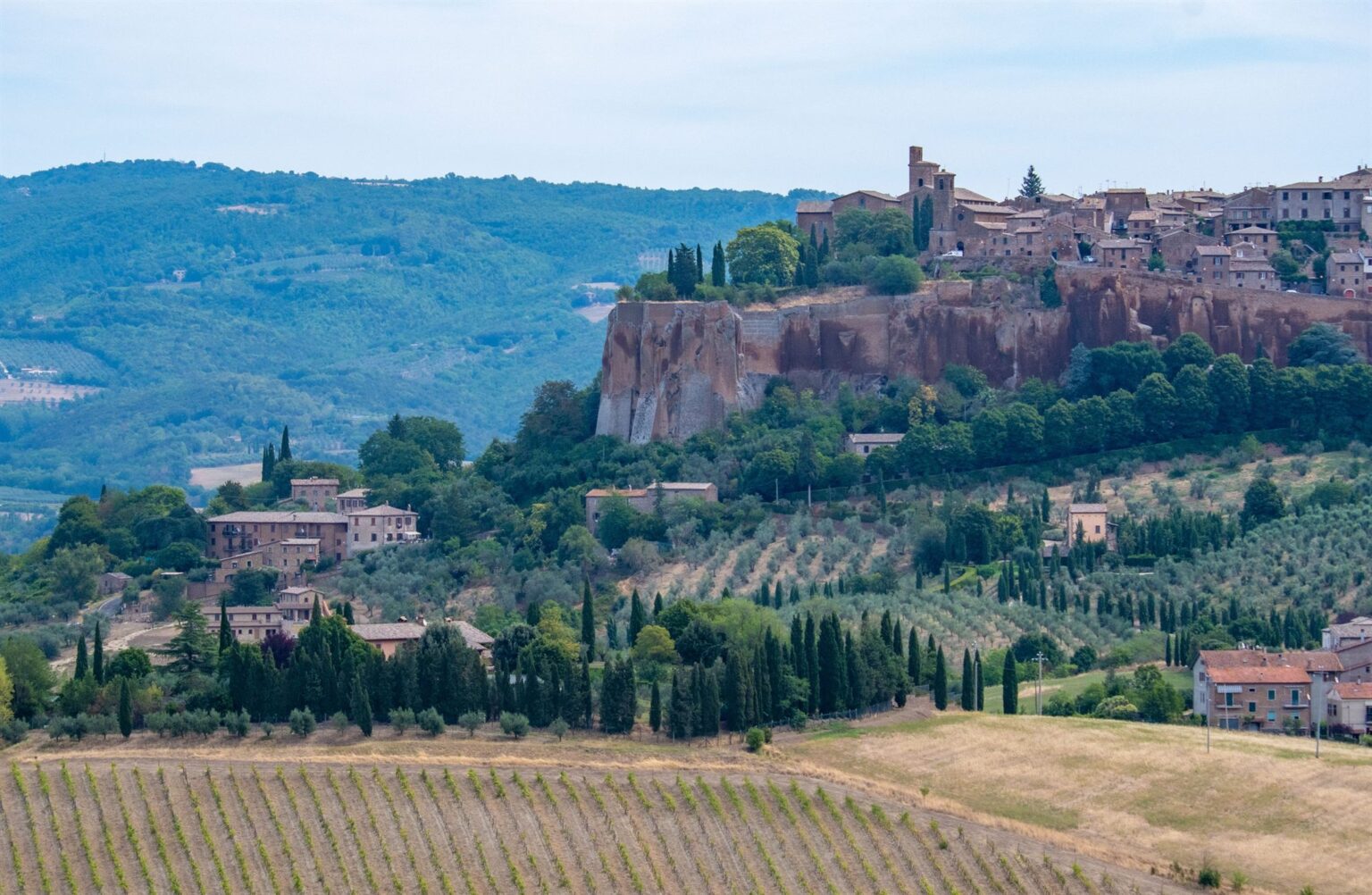
3. Orvieto, the city suspended on the tuff
Once past Florence, the A1 passes right under Orvieto: the exit is direct, the center is about 4.5 km away. The practical advice is to leave the car for free in Orvieto Scalo, near the station, and go up with the funicular which takes you to Piazza Cahen in two minutes (ticket around €3): much more convenient than looking for parking in the historic centre, which is largely pedestrianised. From there you can walk to the Cathedral, with its Gothic mosaic façade, and the St. Patrick's Well, 53 meters deep, dug in the sixteenth century with two spiral ramps that never intersect, designed to let packs loaded with water go up and down without them meeting. Those who have an extra hour can descend into the underground Orvieto, the network of Etruscan caves and tunnels beneath the city.
4. Civita di Bagnoregio, the village that can only be reached on foot
About 18 km from the Orvieto exit, in the direction of Bagnoregio, you arrive at what everyone calls “the dying city”: a tuff village isolated on a rock spur, surrounded by gullies, which can only be accessed via a long pedestrian bridge. The name comes from the erosion that continues to eat away at the surrounding valley. You leave the car in Bagnoregio, there is a fee to enter the village (the cost varies according to day and season, it is best to check the official channels before leaving) and you need comfortable shoes: the bridge is slightly sloping and the village has external staircases. It is a real detour from the A1, not a stop around the corner: it should only be taken into account if you can dedicate at least two hours to it, including the return trip.
5. The Castelli Romani, the lake that almost no one puts on their itinerary
Going down towards Rome, those who are not in a hurry can leave the motorway before the ring road and make a detour towards the Roman Castles.
Nemi, overlooking the small volcanic lake of the same name, is the simplest stop: the town is cozy, the view of the lake alone is worth the stop, and on the banks there is the museum which houses what remains of the ships built by the emperor Caligula as floating palaces, found in the 1930s.
It is the most "optional" stop of the seven: it is fine for those who break the journey into two days with a night in the Rome area, less so for those who head straight for Circeo for the day.
6. Garden of Ninfa and Sermoneta, the last real stop before the sea
Approaching Latina, in Cisterna di Latina, there is the Garden of Ninfa: a garden born on the ruins of a city medieval abandoned in the fourteenth century, defined several times among the most beautiful gardens in the world for how roses, wisteria and ruined towers coexist with lakes and waterfalls.
It is a stage that must be planned, not improvised: in 2026 it will only open on weekends, from 21 March to 8 November, with opening hours that change season by season. The ticket for adults is €15.75, free under 12 years, and the visit lasts about an hour and a half. A few kilometers away is Sermoneta, a medieval village with the Caetani Castle: a good alternative, or additional stop, for those who arrive on a weekday and find the garden closed.
7. Sabaudia, the prelude to Circeo
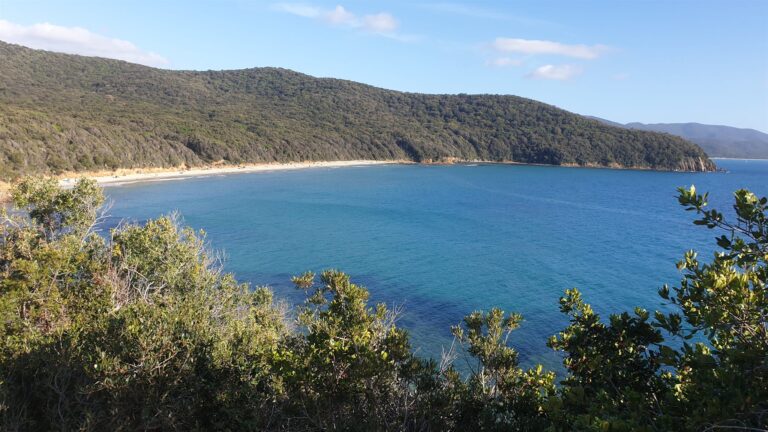
Last stop before arrival: Sabaudia, with Lake Paola behind the dunes and over twenty kilometers of beach which already anticipate the profile of Mount Circeo on the horizon.
On the banks of the lake they remain the remains of the villa that Emperor Domitian it was built right here. It is the right point for a stop at sunset, before traveling the last kilometers towards San Felice Circeo: much better to arrive in this light than to end the journey in a hurry, in the dark, after seven hours of road.
How to get to Circeo without burning the journey
Seven stops should not all be made on the same day: it is the safest recipe for arriving at Circeo exhausted, with the feeling of having seen everything in a hurry and nothing for real.
An observation that is often made only afterwards, while driving: the most beautiful stretch of the journey, the one between Orvieto and Circeo, it is also the shortest, and for this reason the most underrated, the one you do quickly at the end of the day when you are tired. Breaking the journey into two days, with a night between Orvieto and the Castelli Romani, completely changes the perception of the arrival: you descend towards Sabaudia and San Felice Circeo calmly, not with the last energy of the day.
Those who want to remain in these atmospheres a little longer will find other ideas on Finale Ligure and Circeo in The first weekend that already feels like summer.
The Circeo area, between dunes, forest and seaside villages, is also where Villa Marita is taking shape: for now we are still working in the area, but it is the type of place that is worth getting to know before even booking something.