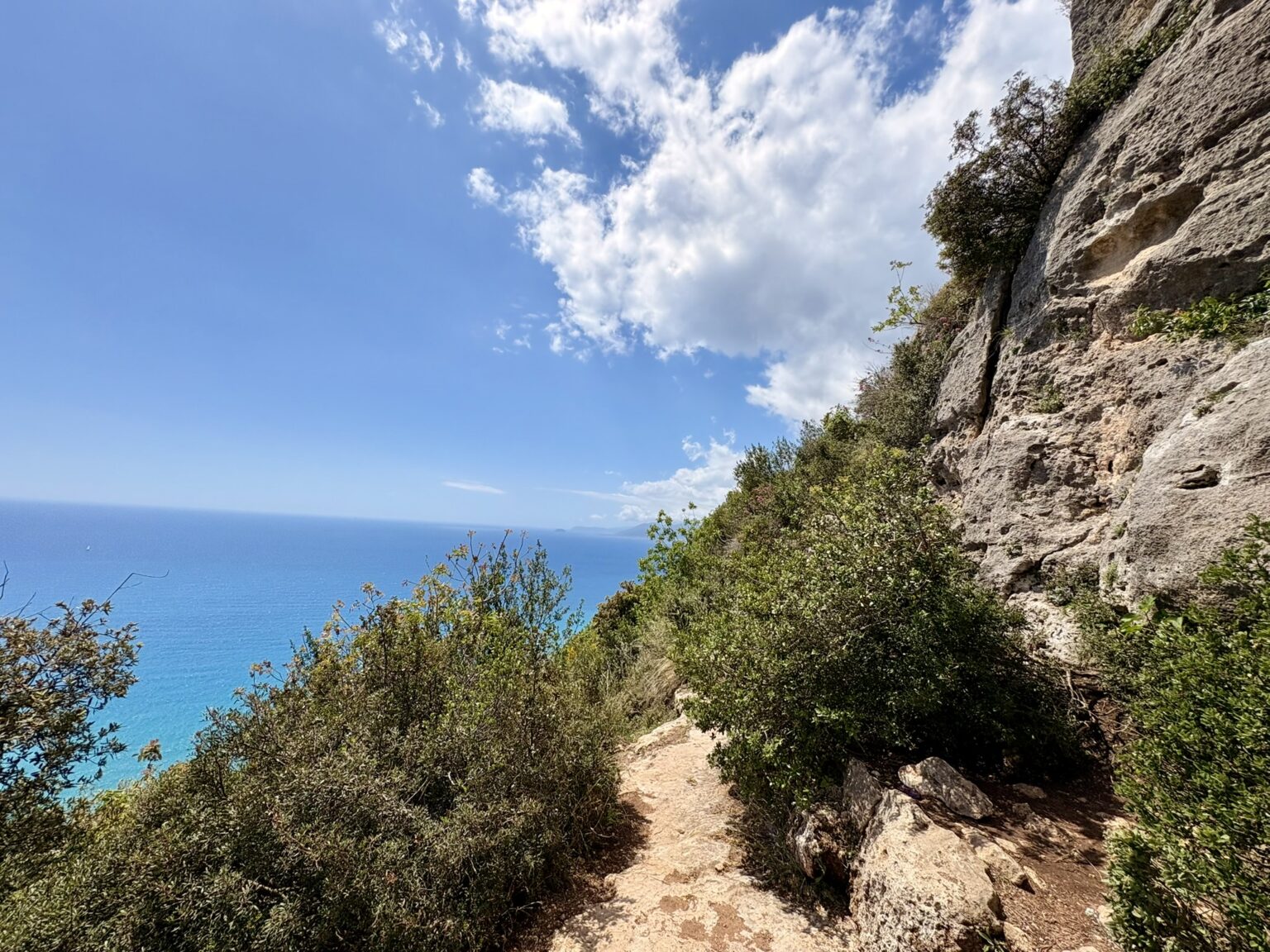
Climbing has been taking place in Finale Ligure for almost sixty years and today, between Borgio Verezzi and Noli, there are around 200 equipped walls and over 3,800 routes. It's a number that excites and confuses at the same time. The cliffs of Finale Ligure they are not chosen only based on the grade: what matters is the exposure, the season, the base of the wall (comfortable or uncomfortable for those waiting), and even the months in which some rocks remain closed to let birds of prey nest. This guide orders them like this, by level and by situation, without claiming to replace a technical guide.
How to choose between the cliffs of Finale Ligure: first the sun, then the grade
The Finale limestone is perforated, rough, generous with the fingers. But it is also a rock that heats up quickly. The first filter, therefore, is the time when the sun reaches the wall.
- Winter and cool days: walls facing south, in the sun all day. Monte Sordo and the Coccinella Cliff are also climbable in January.
- Spring and autumn: the best season almost everywhere. Rocca di Perti, one of the largest complexes in the area, gets the sun from mid-morning on most areas.
- Summer: you look for the shade. The Canyon of Monte Cucco remains in the shade all summer, the Rocce dell'Orera (above Verezzi) too, and the Bastionata di Boragni has always been the most popular crag in the hot months.
An observation that saves half a day: in Finale, in the summer, it is better to think in terms of timetables rather than crags. Early morning on the west-facing sectors, shade in the afternoon, sea at the end of the day.
First steps: where you climb calmly
For those who tie the rope to the harness the first few times, or carry children, the real criterion is not the grade: it is the basis. A wide, flat and safe base is worth more than any easy route.
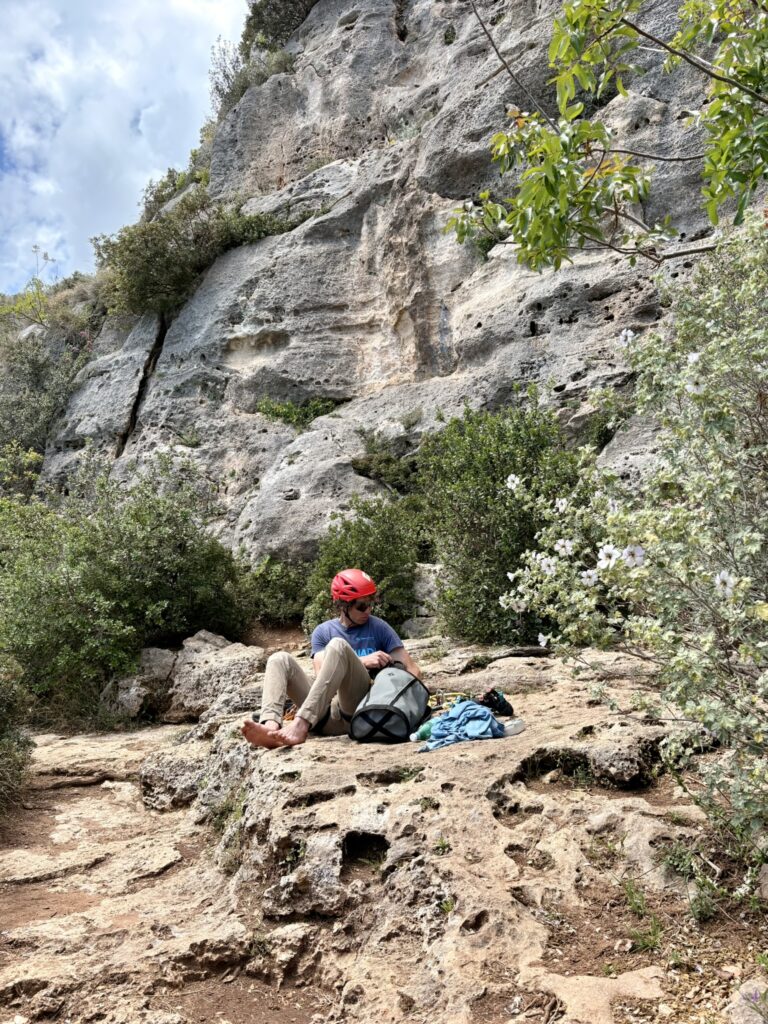
Monte Cucco, First and Second Steps sector
Nine routes from 3c to 5c, about ten meters high, with short bolts designed to help you become familiar with the void. It faces north, so it remains pleasant even in summer, and can be reached in a few minutes from the Orco Feglino Base Camp.
Paretina of Pian Marino
Ten, fifteen minutes of almost flat approach, a car park with a fountain and a meadow at the base where those who don't climb can have a picnic. It is the crag that brings together the whole family.
Tre Porcellini crag, Rocca di Perti
More than twenty slab pitches and some routes of two or three pitches, with a spacious base: perfect for large groups and for a first taste of multi-pitch routes.
Rio Fine Quarry
Routes from 3rd to 5th, very simple approach. The landscape is less spectacular, but a stone's throw away is the Caverna delle Arene Candide, one of the most important prehistoric sites in Liguria, which can be visited with the Museo Diffuso del Finale.
The next step: from 5c to 6c
It is the range in which Finale is at its best, because the average grade of its crags is right there, around 6.
- Coccinella crag: many fifth grade pitches, southern exposure, twenty minutes of easy climbing. Ideal for those who don't want to stop in winter. Irregular base, not suitable for small children.
- Monte Sordo: vertical wall with holes and notches, facing south-west, ten minute approach. Routes from 5a up, with many pitches between 6a and 6c.
- Monte Cucco, La Torre and Central Sector: here you will find lines of 4a and 5c, alongside much harder routes. Convenient for mixed level groups.
- Rian Cornei: with over 450 streets it is one of the largest areas in the Finale area, with sun in the morning or afternoon depending on the sectors.
For those who climb hard
The Grottone di Monte Cucco concentrates 29 routes from 6c to 8c and has become, since 2021, the stage of the Piccolo Festival delle Culture Verticali. At Monte Sordo there is Dingo, 8c+, freed by Stefano Ghisolfi. The Bric Pianarella is the "big wall" of the Finale area, with walls up to 200 meters and medium grade long routes alongside very challenging single pitches. The Bastionata di Boragni, with over 150 routes and overhangs, is the reference point for hot days.
The first long route
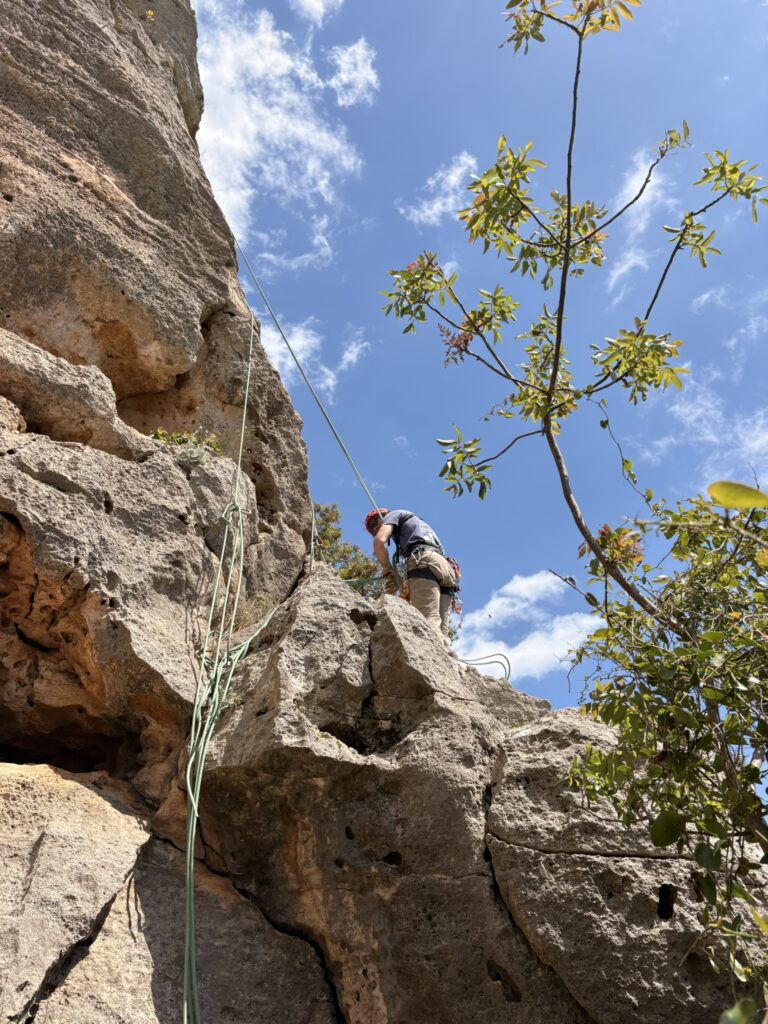
Finale is also the right place to move from a single pitch to a multi-pitch route. On Rocca di Perti, Via col Vento climbs in five pitches from 3b to 4c. The Via dello Spigolo, slightly easier (from 2b to 4th), is instead almost completely unprotected: without experience in fast protection, it is done with an alpine guide. An approach day with a guide starts from around 300 euros for a group of up to six people, a multipitch day from around 300 euros per person.
Things you maybe don't know
- The first route in Finale dates back to May 1968: it is called Titomanlio and climbs the "torpedo" of Rocca di Corno. The first climbers, from Genoa, opened their way in the Mediterranean scrub with the machete.
- Since 1994, an agreement between climbers, WWF and LIPU has regulated the coexistence of peregrine falcons and eagle owls. Monte Tolla, Bric Reseghe, Rocca degli Uccelli and the central and right sectors of Boragni are closed from 1 January to 31 July. Other walls (Caprazoppa, Capo Noli, Casa del Vacchè, part of Pianarella and Rocca di Corno) have permanent bans.
- On the belays at the cliffs in Finale you almost never find fixed carabiners: to lower yourself you need to know how to do the rope maneuver at the belay. It's worth reviewing before you leave.
- Finale For Nepal is usually held in October, with bouldering contests, volunteering and parties: a good excuse for an autumn weekend.
Practical tips before leaving
- Check bans and closures in the Live Info section of Outdoor Final, also updated on maintenance and landslides.
- Park only where permitted. The roads to Perti, Monte Sordo and Pian Marino are narrow and must remain free for rescue operations: vans and vans are prohibited from transit on the road to Monte Sordo, and on the last kilometers towards Pian Marino there are weight and length limits.
- Buy the guide on site. The references are “Finale 51” by Andrea Gallo (Idee Verticali) and “Finale Climbing” by Marco Tommasini (Versante Sud): they can be found in the Finalborgo shops and at the Infopoint Outdoor.
- Before going out, look at AllertaLiguria. With weather warnings the approach trails are no place to be.
- If it rains, the Monte Cucco Amphitheater sector remains scalable, or there is the Supergiù indoor gym a few kilometers from the centre.
- If you're traveling with someone who doesn't climb, choose crags with a comfortable base (Pian Marino, Tre Porcellini): half the success of a family day depends on there.
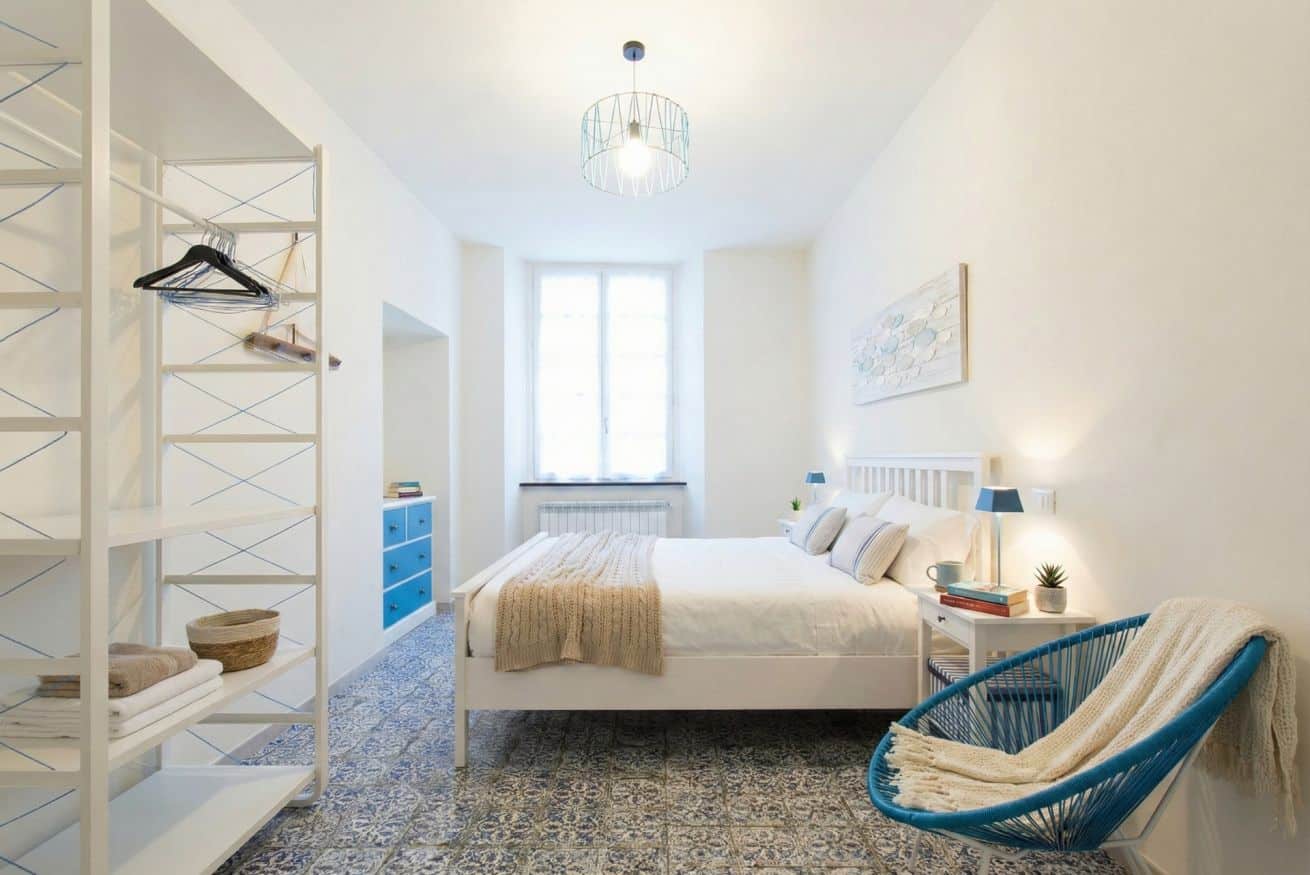
An advantage of Finale that the technical guides don't mention: the cliffs of the plateau are generally a few kilometers from the village, and the approach on foot rarely exceeds 25 minutes. If the base is Finalborgo, as for those staying in Bric44, you can climb in the morning, have lunch in the square and end the day on the beach, without having to choose.
Beyond the rope
The cliffs of Finale Ligure are just part of what the plateau has to offer. The same paths that lead to the walls become walking itineraries among olive trees, caves and watchtowers: if you want to stay in the area on rest days, start from paths between Finale Ligure and Varigotti or from ideas for a trekking weekend by the sea in autumn.