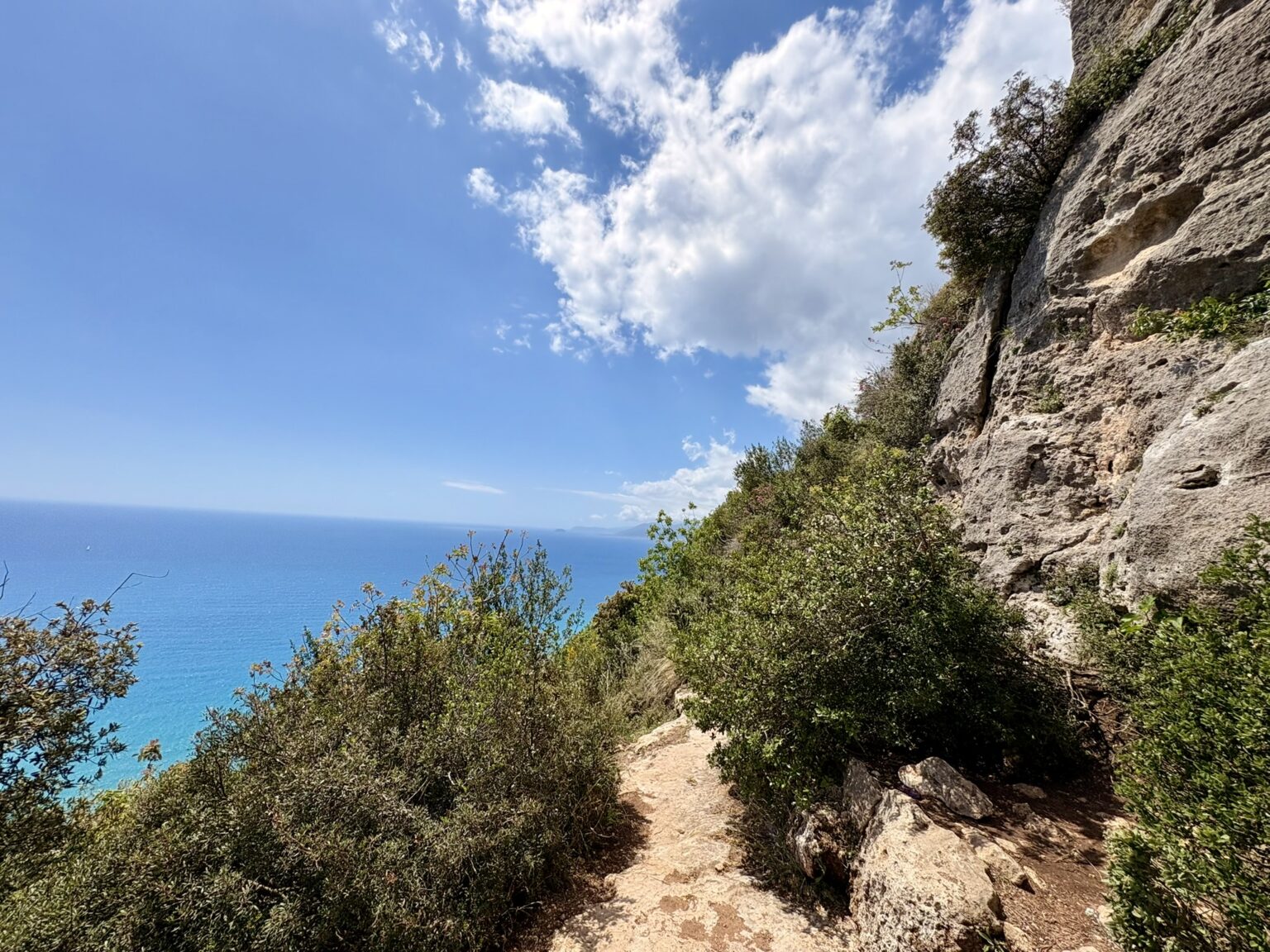
People have been climbing in Finale Ligure for almost sixty years and today, between Borgio Verezzi and Noli, there are around 200 equipped crags and over 3,800 routes. It's a number that thrills and confuses at the same time. The Finale Ligure crags aren't chosen by grade alone: what counts is the aspect, the season, the base of the wall (comfortable or not for whoever is waiting), and even the months when some rocks are closed so birds of prey can nest. This guide sorts them that way, by level and by situation, without claiming to replace a technical guidebook.
How to choose a Finale Ligure crag: sun first, then grade
Finale limestone is pocketed, rough and generous on the fingers. But it's also a rock that heats up fast. So the first filter is the time the sun hits the wall.
- Winter and cool days: south-facing walls, in the sun all day. Monte Sordo and the Falesia della Coccinella can be climbed even in January.
- Spring and autumn: the best season almost everywhere. Rocca di Perti, one of the biggest complexes in the area, gets the sun from mid-morning on most sectors.
- Summer: you look for shade. The Canyon at Monte Cucco stays shaded all summer, as do the Rocce dell'Orera (above Verezzi), and the Bastionata di Boragni has always been the favourite crag in the hot months.
A tip that saves you half-days: in Finale, in summer, it pays to plan by time of day rather than by crag. Early morning on the west-facing sectors, shade in the afternoon, sea at the end of the day.
First steps: where to climb without stress
For those tying into the harness for the first few times, or bringing children, the real criterion isn't the grade: it's the base. A wide, flat, safe base is worth more than any easy route.
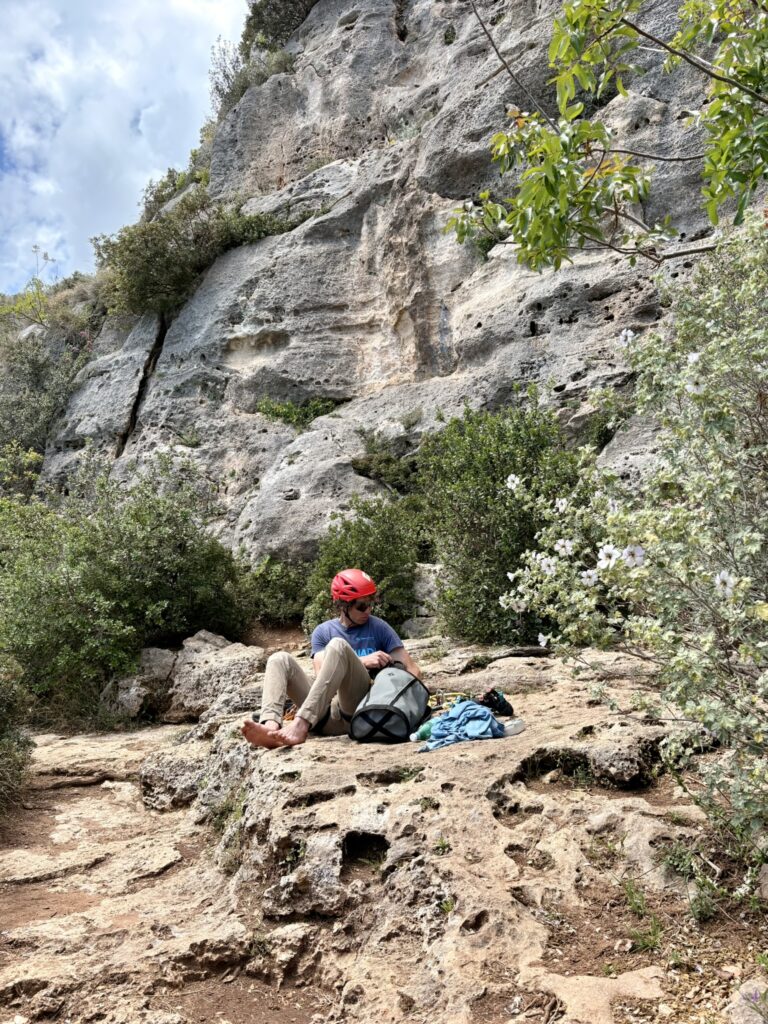
Monte Cucco, Primi e Secondi Passi sector
Nine routes from 3c to 5c, about ten metres high, with closely spaced bolts designed to help you get used to the exposure. It faces north, so it stays pleasant even in summer, and it's a few minutes from the Base Camp di Orco Feglino.
Paretina di Pian Marino
Ten, fifteen minutes of almost flat approach, a car park with a fountain and a meadow at the base where non-climbers can have a picnic. It's the crag that suits the whole family.
Tre Porcellini crag, Rocca di Perti
More than twenty pitches of slab and a few routes of two or three pitches, with a spacious base: perfect for big groups and for a first taste of multi-pitch climbing.
Cava di Rio Fine
Routes from grade 3 to 5, very easy approach. The scenery is less spectacular, but a stone's throw away is the Caverna delle Arene Candide, one of the most important prehistoric sites in Liguria, which can be visited through the Museo Diffuso del Finale.
The next step: from 5c to 6c
It's the range where Finale is at its best, because the average grade of its crags sits right there, around 6.
- Falesia della Coccinella: lots of 5th-grade pitches, south-facing, twenty minutes of easy uphill walking. Ideal if you don't want to stop in winter. Uneven base, not great for small children.
- Monte Sordo: a vertical wall with pockets and crimps, facing south-west, ten minutes' approach. Routes from 5a upwards, with plenty of pitches between 6a and 6c.
- Monte Cucco, La Torre and Central Sector: here you'll find 4a and 5c routes, alongside much harder ones. Handy for groups of mixed ability.
- Rian Cornei: with over 450 routes it's one of the largest areas in the Finalese, with sun in the morning or afternoon depending on the sector.
For those who climb hard
Grottone di Monte Cucco has 29 routes from 6c to 8c and, since 2021, has been the stage for the Piccolo Festival delle Culture Verticali. At Monte Sordo there is Dingo, 8c+, freed by Stefano Ghisolfi. Bric Pianarella is the Finalese “big wall”, with walls up to 200 metres and long routes of medium grade alongside very demanding single-pitch climbs. The Bastionata di Boragni, with over 150 routes and overhangs, is the go-to on hot days.
Your first multi-pitch route
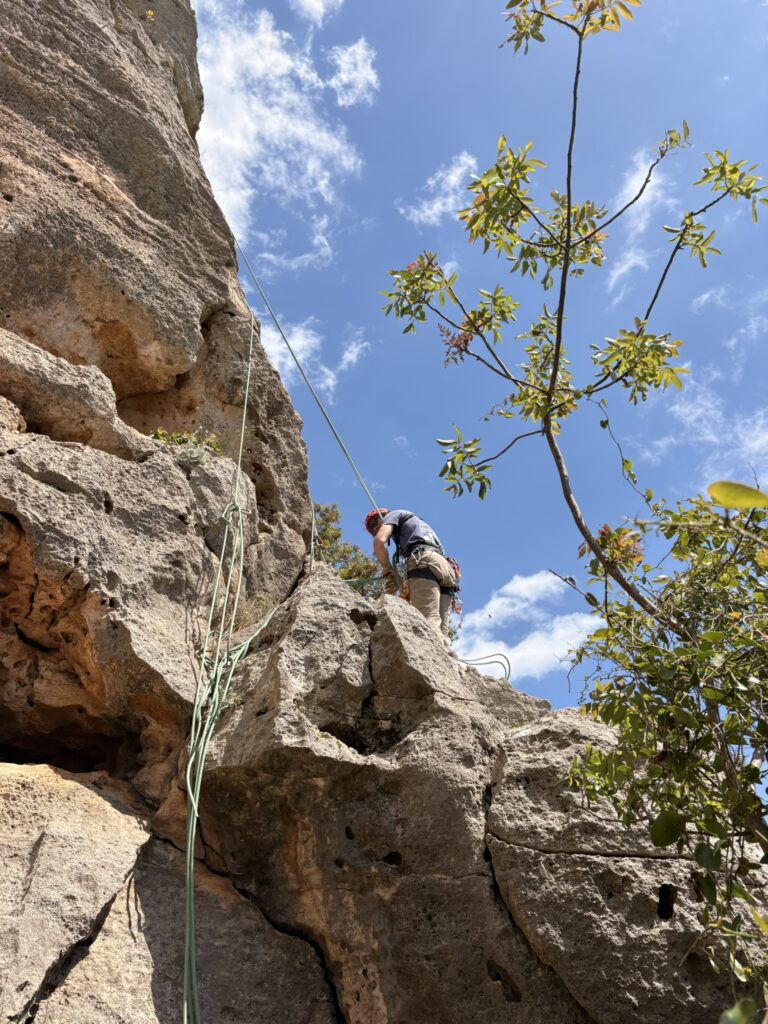
Finale is also the right place to move from single-pitch to multi-pitch climbing. On Rocca di Perti, Via col Vento climbs in five pitches from 3b to 4c. Via dello Spigolo, slightly easier (from 2b to grade 4), is almost completely unprotected: without experience of fast protection, do it with a mountain guide. A guided approach day starts at around 300 euros for a group of up to six people, a multi-pitch day from around 300 euros per person.
Things you may not know
- The first route at Finale dates from May 1968: it's called Titomanlio and climbs the “torpedo” of Rocca di Corno. The first climbers, from Genoa, hacked their way through the Mediterranean scrub with machetes.
- Since 1994, an agreement between climbers, WWF and LIPU has governed coexistence with peregrine falcons and eagle owls. Monte Tolla, Bric Reseghe, Rocca degli Uccelli and the central and right sectors of Boragni are closed from 1 January to 31 July. Other walls (Caprazoppa, Capo Noli, Casa del Vacchè, part of Pianarella and Rocca di Corno) are permanently off limits.
- At the belays on the Finale crags you almost never find fixed carabiners: to lower off you need to know how to do the rope manoeuvre at the belay. It's worth brushing up on it before you set off.
- Finale For Nepal is usually held in October, with bouldering contests, volunteering and parties: a good excuse for an autumn weekend.
Practical tips before you set off
- Check bans and closures in the Live Info section of Finale Outdoor, which is also updated on maintenance work and landslides.
- Park only where permitted. The roads to Perti, Monte Sordo and Pian Marino are narrow and must be kept clear for rescue vehicles: vans are not allowed on the road to Monte Sordo, and the last kilometres towards Pian Marino have weight and length limits.
- Buy the guidebook locally. The reference guides are “Finale 51” by Andrea Gallo (Idee Verticali) and “Finale Climbing” by Marco Tommasini (Versante Sud): you'll find them in the shops of Finalborgo and at the Infopoint Outdoor.
- Before heading out, check AllertaLiguria. When there's a weather alert, the approach trails are no place to be.
- If it rains, the Anfiteatro sector at Monte Cucco is still climbable, or there's the Supergiù indoor gym a few kilometres from the centre.
- If you're travelling with someone who doesn't climb, choose crags with a comfortable base (Pian Marino, Tre Porcellini): half the success of a family day depends on it.
Something about Finale that technical guides don't mention: the crags on the plateau are generally just a few kilometres from the old town, and the walk-in rarely takes more than 25 minutes. If your base is Finalborgo, as it is for guests staying at Bric44, you can climb in the morning, have lunch in the square and end the day on the beach, without having to choose.
Beyond the rope
The crags of Finale Ligure are only part of what the plateau has to offer. The same trails that lead to the walls become walking routes among olive trees, caves and watchtowers: if you want to stay local on rest days, start from the trails between Finale Ligure and Varigotti or from ideas for a an autumn trekking weekend by the sea.