Those looking for advice on how to experience Lisbon often end up in front of usual endless lists: ten miradouros, five trams to take, twelve "unmissable" places.
The problem is that Lisbon is not a city that works well in a hurry.
The best things almost always happen in the middle: a wrong turn in Alfama, a lunch that lasted longer than expected, a tram taken without knowing exactly where to get off. It's a city that rewards those who slow down.
This is not a checklist of things to see but one practical guide to experience a more authentic Lisbon, with more human rhythms and less automatic tourism.
The authentic neighborhoods of Lisbon to experience without haste
Many come to Lisbon looking for monuments. In reality, the most beautiful part of the city is often what happens between one stop and another. This is why it is best to choose a few neighborhoods and really experience them.
Alfama
Alfama is the most photographed neighborhood of Lisbon, but also one of the easiest to ruin by chasing "things to do".
The best way to experience it is simple:
- go there early in the morning or in the evening
- avoid following Google Maps rigidly
- stop in the side streets
- sit in small bars without looking too much at the reviews
Here the atmosphere is more important than the individual attraction.
Thank you
Much less frenetic than other central areas, Graça is perfect if you're looking for a slower-paced Lisbon.
There are miradouros beautiful, but above all one daily life still very present: markets, elderly people sitting outside their homes, small shops and terraces where you can really stop.
Mouraria
It is one of the neighborhoods that has changed the most in recent years, but still maintains a strong local identity.
It's worth it go around it without a precise itinerary, especially in the evening, when the restaurants start to fill up and the city slows down a bit.
What to do in Lisbon calmly instead of chasing stages
One of the most underrated things in Lisbon is leaving space for empty time. There is no need to fill every hour, in fact the city often gives its best precisely when you stop optimizing everything.
Choose a few miradouros
THE scenic spots are everywhere, but visiting them all one after the other makes them almost the same.
Better to choose two or three and live them well.
The Miradouro da Senhora do Monte, for example, works much better at sunset with something to drink and time to actually stop, rather than as a five-minute stop.
Take the tram without using it as an attraction
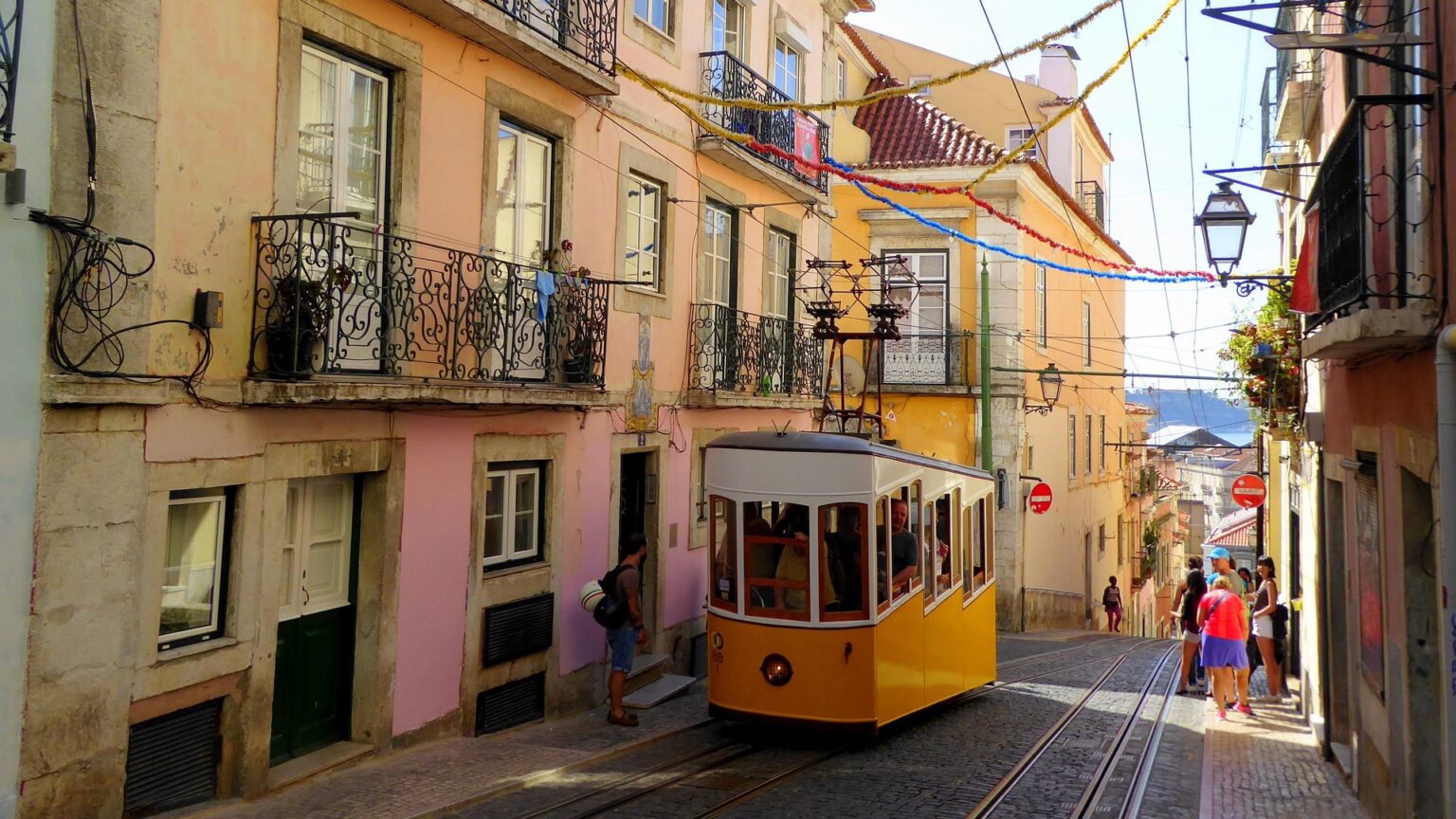
The famous Tram 28 it's iconic, but it's also often packed.
To experience Lisbon in a more natural way it is better to:
- also use normal trams
- alternate cheap taxis and walking
- try the historic elevators
- cross the Tagus by ferry
The city changes completely depending on the means by which you cross it.
Stop at the kiosks
THE kiosks scattered around Lisbon are one of the easiest ways to really get into the local rhythm.
A beer, a coffee, something quick to eat and half an hour spent without plans often tell more about the city than many attractions.
Where to eat in Lisbon without ending up in tourist places
Eating well in Lisbon is not difficult. The problem, if anything, is to avoid places built only for those who spend two days in the city.
A good criterion is observe how long people sit.
If everyone eats quickly and leaves, the place probably thrives on tourist flow, but if the tables remain occupied for a long time, it is already an excellent sign.
What to really order
In many places it is better to avoid menus that are too "international" and stick to simple things:
- bacalhau
- sardines
- arroz de marisco
- petiscos
- I have green wine
Lisbon cuisine works well when it's not trying to impress.
Schedules change the way you experience the city
Have lunch late and dinner even later helps you get into the local rhythm. This also changes the perception of travel a lot.
Lisbon is not a city with a full agenda from 8am to 10pm.
Lisbon slow travel: why it's worth seeing less
Many travelers set out with the idea of "seeing everything". With Lisbon the opposite often happens: the more you slow down, the more the city sticks around you.
There are cities that function for attractions, Lisbon works above all for atmosphere.
This is why it's worth it:
- leave afternoons free
- return to the same neighborhood twice
- sit and do nothing
- change program
- Don't turn the trip into a marathon
The surroundings also deserve this approach: Cascais, Sintra, Costa da Caparica or the wilder beaches reachable outside the city work much better with slow rhythms and without too many stages to fit in.
Practical advice for living Lisbon better
There are some simple things that really make the trip better.
Comfortable shoes
It seems trivial, but Lisbon is much more tiring than it seems online. Climbs, cobblestones and stairs make a difference after a few hours.
Avoid central times in the most famous spots
Trams, elevators and miradouros change completely between 11am and 7pm. Dawn, late morning or evening are the best times.
Leave room for the unexpected
The most successful days often start like this:
- a place found by chance
- a wrong path
- an improvised terrace
- a neighborhood where you can stop longer than expected
Lisbon rewards those who stop wanting to control everything.
Lisbon without a checklist is the one you will probably remember the most
In the end, truly experiencing Lisbon means stopping treating it like a list of things to tick off.
You don't need to see everything, you need to find your own rhythm inside the city.
Maybe it's a slow breakfast in Alfama, or a tram taken without a specific destination or a dinner that lasts until late in a pocket full of noise.
Those are the things that remain.
A bit like what happens when you find yourself a place that manages to make you feel elsewhere, but without feeling out of place